
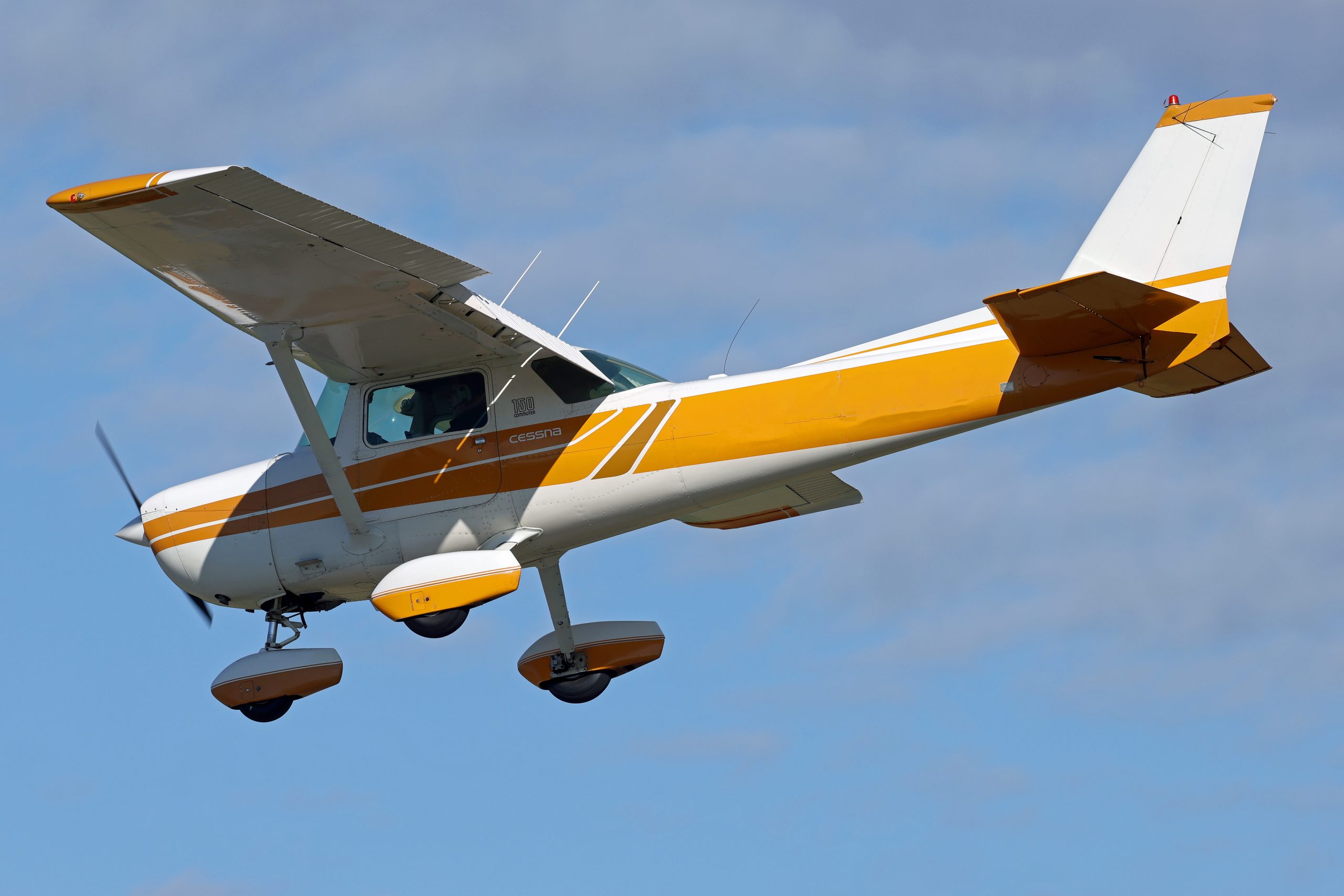
Cessna Fuel Systems Explained: Comparing the 150, 152, 172, 177, 182, and 310
August 20th, 2026Posted by Cristhian Vera
Cessna’s piston fleet spans simple, gravity-fed carbureted trainers to fuel-injected, retractable-gear singles and a twin-engine cabin aircraft. The 150 and 152 use basic gravity-fed carbureted systems. The 172 and 177 Cardinal were built with carbureted engines for most of their production, then fuel-injected engines in later variants (172R/S, Cardinal RG). The 182 follows the same pattern, while its retractable-gear sibling, the R182/TR182, kept a carbureted Lycoming engine and the newer T182T switched to a fuel-injected, turbocharged one. The 310 adds the complexity of feeding two engines. Knowing which system a specific aircraft has affects preflight checks, in-flight fuel management, and maintenance planning.
The sections below cover each model’s fuel-system architecture, what pilots need to manage in flight, and what mechanics should watch during maintenance.
Important Note: Fuel-system configurations can vary by model year, engine installation, optional equipment, and aftermarket modification. This article describes the fuel-system architecture typically found in each aircraft family. Always confirm aircraft-specific procedures and configurations against the applicable Pilot’s Operating Handbook (POH), Aircraft Flight Manual (AFM), maintenance manual, and other approved documentation.
Why Fuel System Design Varies Across the Cessna Fleet
Cessna’s piston fleet spans basic trainers to retractable-gear, turbocharged singles and a cabin-class twin. Although these aircraft share a manufacturer, how each one stores, delivers, meters, and manages fuel is shaped by its mission, engine installation, payload capability, performance requirements, and operating environment.
As aircraft become larger, faster, and capable of carrying heavier loads over greater distances, fuel systems become more sophisticated. Additional tanks, selector valves, engine-driven pumps, electric boost pumps, fuel-injection components, and more complex routing support greater range, higher power settings, increased payload, and operational redundancy.
These are the general aviation fuel system basics that carry across most piston aircraft, not just the Cessna fleet — and they’re the foundation for understanding how each model below is built.
Quick Comparison of Cessna Fuel Systems
| Model | Induction Type | Fuel Delivery | Engine Configuration | Complexity |
|---|---|---|---|---|
| Cessna 150 | Carbureted | Gravity-fed | Single, normally aspirated (Continental O-200) | Low |
| Cessna 152 | Carbureted | Gravity-fed | Single, normally aspirated (Lycoming O-235) | Low |
| Cessna 172 | Carbureted (1968-mid 1980s) or Fuel-Injected (1996-on) | Gravity-fed / pump-assisted | Single, normally aspirated | Low to Moderate |
| Cessna 177 Cardinal | Carbureted (177/177A/177B) or Fuel-Injected (Cardinal RG) | Gravity-fed / pump-assisted | Single, normally aspirated; RG retractable | Moderate |
| Cessna 172RG Cutlass RG | Carbureted | Gravity-fed / pump-assisted | Single, normally aspirated, retractable gear | Moderate |
| Cessna 182 | Carbureted (most models through the 1980s) or Fuel-Injected (1996-on) | Gravity-fed / pump-assisted | Single, normally aspirated | Moderate |
| Cessna R182 / TR182 | Carbureted | Pump-assisted | Single, normally aspirated (R182) or turbocharged (TR182), retractable gear | Moderate to High |
| Cessna T182T | Fuel-Injected | Pump-assisted | Single, turbocharged | Moderate to High |
| Cessna 310 | Carbureted (1954-58) or Fuel-Injected (1959-on) | Pump-assisted | Twin, normally aspirated | High |
How Cessna Fuel Systems Changed as Aircraft Became More Capable
Basic trainers like the 150 and 152 use simple gravity-fed systems that require minimal in-flight fuel management. As aircraft gained payload, range, and performance, fuel systems grew more sophisticated — greater fuel capacity, more complex routing, fuel pumps, selectors, and eventually fuel injection to support higher power settings and broader operating envelopes. Retractable gear added another variable: several models paired their RG variant with a different engine family entirely, not just added complexity.
Twin-engine aircraft add a further layer of complexity: delivering fuel to two engines while maintaining balance and redundancy throughout the flight.
The result is a wide range of fuel-system architectures across the Cessna fleet, each built to support that aircraft’s intended mission.
Carburetors, Fuel Injection, and Mixture Control
Every Cessna piston engine needs the right ratio of fuel to air to run properly, and both carbureted and fuel-injected systems rely on the pilot managing that ratio with the mixture control.
In a carbureted engine — the Continental O-200 in the 150, the Lycoming O-235 in the 152, or the Lycoming O-320/O-360 family in most 172s, Cardinals, and the Cutlass RG — incoming air passes through a carburetor venturi, which draws fuel from a fuel bowl in proportion to airflow. The mixture control adjusts how much fuel enters that airstream, which matters most as altitude increases and air density drops.
Fuel-injected Cessnas in this lineup — the 172R/S, the Cardinal RG, 182s built since the 1996 restart, the T182T, and 310s built from 1959 on — use a continuous-flow fuel-injection system, not the timed, electronically controlled port injection found in modern automotive engines. An engine-driven fuel-control unit meters fuel to a flow divider, which distributes it to each cylinder through injector nozzles. Mixture control still adjusts the fuel-to-air ratio, but by regulating fuel flow at the control unit rather than fuel drawn through a venturi.
Neither approach is inherently better. Carbureted systems have fewer components and are generally simpler to maintain. Fuel-injected systems add components but offer more consistent fuel distribution and are less prone to carburetor icing. Which system a given aircraft has affects preflight checks, starting procedures, and maintenance requirements.
Cessna 150 Fuel System
Architecture
The Cessna 150 uses a simple, gravity-fed fuel system built around the carbureted Continental O-200 engine. Fuel is stored in wing tanks and flows by gravity through a fuel shutoff valve and strainer to the carburetor, where it mixes with incoming air before entering the engine. There is no engine-driven or electric fuel pump, which reduces the number of components that need inspection.
Operational Considerations
This design gives pilots predictable, low-workload fuel management: there are few in-flight tasks, and the system is easy to understand. That doesn’t remove risk — fuel contamination, blocked tank vents, restricted lines, or carburetor issues can still affect engine performance. Pilots should stay disciplined about fuel sampling, quantity checks, and carburetor heat use when icing conditions are possible.
Cessna 150 Engine and Fuel System Maintenance
- Fuel tank condition
- Tank vent operation
- Fuel strainer cleanliness
- Fuel line condition
- Carburetor health
- Fuel contamination prevention
Cessna 152 Fuel System
Architecture
The Cessna 152 follows the same fuel-system approach as the 150: fuel is stored in wing tanks and gravity-fed to a carburetor, in this case on the Lycoming O-235 engine. The architecture is simple, refined over the aircraft’s long production run.
Operational Considerations
Fuel management is straightforward, and the aircraft rewards basic fuel-system discipline over complex procedure. Fuel quantity monitoring, preflight inspection, contamination checks, and carburetor heat use remain essential — most fuel-related issues in training aircraft trace back to contamination or deferred maintenance rather than system design.
Cessna 152 Engine and Fuel System Maintenance
- Fuel tank integrity
- Vent system operation
- Fuel strainer condition
- Carburetor performance
- Fuel line security and condition
Cessna 172 Skyhawk Fuel System
Architecture
The Cessna 172 has used four different engines across its production run. The original 1956 172 was built with a carbureted Continental O-300. Cessna switched to the carbureted Lycoming O-320 in 1968 — the E2D, later H2AD and D2J variants carried the aircraft into the early 1980s. The 1983-84 172Q Cutlass then moved to the larger carbureted Lycoming O-360-A4N (180 hp) before production paused. When production resumed in 1996, the 172R and later 172S introduced the fuel-injected Lycoming IO-360-L2A.
Fuel is stored in wing tanks and delivered through a four-position selector (LEFT, RIGHT, BOTH, OFF), with tank vents interconnected between wings to help equalize fuel level as it’s burned.
Operational Considerations
As the most widely used trainer in general aviation, the 172’s fuel system is the one most pilots learn on first. Fuel management is straightforward but not automatic — the selector should be on BOTH for takeoff, climb, and landing, with LEFT or RIGHT reserved for cruise. Which engine a specific 172 has changes starting procedure and mixture-leaning technique, so confirming the model year and engine matters before flying an unfamiliar aircraft.
Cessna 172 Engine and Fuel System Maintenance
- Fuel selector operation (all four positions)
- Tank vent interconnection
- Fuel strainer condition
- Fuel line condition
- Carburetor or fuel-injection system health, depending on model year
- Fuel contamination prevention
Cessna 177 Cardinal Fuel System
Architecture
The Cessna 177 Cardinal was built with two different Lycoming induction systems. The original 1968 177 used a carbureted Lycoming O-320-E2D; Cessna moved to the more powerful carbureted O-360 for the 177A and 177B starting in 1969. The retractable-gear Cardinal RG (1971-1978) switched to a fuel-injected Lycoming IO-360-A1B6 instead — the only Cardinal variant with fuel injection, and a case where the RG model changed induction type rather than just adding gear and pumps.
Operational Considerations
Fixed-gear Cardinal owners manage a carbureted fuel system similar in principle to the 172’s. Cardinal RG owners are flying a fuel-injected system and need to follow fuel-injected starting and leaning procedures rather than carbureted ones — a common point of confusion for pilots moving between the two variants.
Cessna 177 Engine and Fuel System Maintenance
- Fuel selector operation
- Tank vent condition
- Fuel strainer condition (fixed-gear models)
- Fuel-control components and flow divider (Cardinal RG)
- Fuel line condition
- Carburetor or fuel-injection system health, depending on variant
Cessna 172RG Cutlass RG Fuel System
Architecture
The 172RG Cutlass RG (1980-1985) paired the 172 airframe with retractable gear and a more powerful carbureted Lycoming O-360-F1A6. Unlike the Cardinal RG, the Cutlass RG kept a carbureted induction system — the added complexity here comes from the retractable gear and constant-speed propeller, not the fuel system itself.
Operational Considerations
Fuel management follows the same carbureted-engine principles as the fixed-gear 172, but pilots also manage retractable gear and propeller controls as part of the workload. That raises the aircraft’s overall complexity even though the fuel system stays comparatively simple.
Cessna 172RG Engine and Fuel System Maintenance
- Fuel selector operation
- Fuel strainer condition
- Fuel line condition
- Carburetor health
- Fuel contamination prevention
Cessna 182 Skylane Fuel System
Architecture
The Cessna 182 was built with two different induction systems depending on model year. Most production models through the 1980s used the carbureted Continental O-470 series. When Cessna resumed 182 production in 1996, the 182S and later 182T switched to the fuel-injected Lycoming IO-540. Confirming which engine a specific aircraft has is essential — it changes fuel-system components, starting procedures, and maintenance requirements.
Compared with the 150 and 152, the 182 carries significantly more fuel and is built for longer flights and greater payload, with a larger-capacity system and fuel selector to match.
Operational Considerations
For many owners, the 182 is the first aircraft where fuel management becomes an active part of the mission rather than a preflight formality. Longer cross-country flights, higher fuel burns, and greater payload flexibility make fuel planning, tank selection, and fuel-balance awareness more important than in a typical trainer.
Cessna 182 Engine and Fuel System Maintenance
- Fuel selector condition and operation
- Fuel quantity indication accuracy
- Fuel tank and vent inspection
- Fuel line condition
- Carburetor or fuel-injection system health, depending on model year
- Fuel-balance behavior on BOTH (pre-1979 182s are known for uneven tank draw and are worth checking during annual inspection)
Cessna R182 / TR182 Skylane RG Fuel System
Architecture
The retractable-gear Skylane RG (R182, 1978-1986) swapped the standard 182’s carbureted Continental O-470 for a carbureted Lycoming O-540-J3C5D, largely to make room for the retractable nose gear. The turbocharged TR182 added a manually controlled wastegate to the same carbureted O-540 rather than switching to fuel injection.
Operational Considerations
R182 and TR182 owners are flying a different engine family than standard-182 owners, even though the airframe looks similar — carburetor heat use, leaning technique, and parts sourcing follow the Lycoming O-540, not the Continental O-470. TR182 pilots also manage manual wastegate control, which adds a step the normally aspirated R182 doesn’t have.
Cessna R182/TR182 Engine and Fuel System Maintenance
- Fuel selector condition and operation
- Fuel quantity indication accuracy
- Fuel tank and vent inspection
- Fuel line condition
- Carburetor health
- Wastegate and induction system condition (TR182)
Cessna T182T Turbo Skylane Fuel System
Architecture
The current-production T182T pairs the 182 airframe with a turbocharged, fuel-injected Lycoming TIO-540-AK1A — a different engine family from both the standard Continental-powered 182 and the carbureted Lycoming O-540 in the R182/TR182. The turbocharger is factory-integrated rather than added on, with an automatic wastegate controller.
Operational Considerations
T182T pilots manage a fuel-injected, turbocharged system in a fixed-gear airframe. Automatic wastegate control simplifies high-altitude operation compared with the manually controlled TR182, but pilots still need to understand fuel-injected starting procedure and turbocharger operating limits.
Cessna T182T Engine and Fuel System Maintenance
- Fuel pump performance
- Fuel pressure indications
- Fuel-control components
- Fuel-injection system health
- Turbocharger and wastegate condition
- Fuel-line integrity
- Contamination prevention
Cessna 310 Fuel System
Architecture
The Cessna 310 adds the complexity of feeding two engines. The earliest 310, 310A, and 310B models (1954-1958) used the carbureted Continental O-470-B. Starting with the 310C in 1959, Cessna switched to fuel-injected Continental IO-470 and later IO-520 engines, which became standard for the rest of production. Depending on the model, the aircraft may include multiple main and auxiliary tanks, fuel selectors, boost pumps, and crossfeed capability, which lets one engine draw fuel from a tank normally assigned to the other side.
Operational Considerations
Pilots need to understand tank usage, fuel balance, crossfeed operation, engine-specific routing, and emergency fuel-management procedures. Solid knowledge of the fuel system is part of safe multiengine operation, since fuel management affects both performance and redundancy.
Cessna 310 Engine and Fuel System Maintenance
- Fuel selectors
- Crossfeed components
- Fuel pumps
- Fuel quantity systems
- Fuel routing hardware
- Tank condition
Operational and Ownership Considerations
Owners sometimes assume that because an aircraft carries the Cessna name, its fuel system works like every other Cessna’s. In practice, the differences are substantial. A 150 or 152 owner manages a simple gravity-fed carbureted system. A 172 or Cardinal owner may have either a carbureted or fuel-injected system depending on model year. A 182 owner’s engine depends on whether it’s a Continental-powered pre-1996 aircraft, a Lycoming-powered R182/TR182, or a fuel-injected 182S/T or T182T. A 310 owner manages fuel for two engines while maintaining balance and redundancy.
These differences affect preflight procedures, operating technique, maintenance planning, troubleshooting methods, and long-term ownership costs.
Fuel-System Knowledge and Flight Safety
Many fuel-related incidents aren’t caused by component failure — they come from fuel exhaustion, fuel starvation, contamination, improper tank selection, or unfamiliarity with the system. As fuel systems grow more complex across the Cessna line, understanding fuel routing, management procedures, and system limitations for the specific aircraft being flown remains a core part of safe operation, from a 150 to a twin-engine 310.
Bottom Line
Cessna fuel systems are best understood by model, not by generalization. The gravity-fed carbureted systems in the 150, 152, and most 172s and Cardinals differ substantially from the fuel-injected systems in the 172R/S, Cardinal RG, later 182s, the T182T, and later 310s. Knowing those differences helps pilots, owners, and mechanics make better operational decisions, troubleshoot more effectively, and keep the aircraft running reliably.
Frequently Asked Questions
What is the difference between a Cessna 150 and 152 fuel system?
The systems are very similar. Both use gravity-fed fuel systems and carburetors; the main differences come from the engine (Continental O-200 vs. Lycoming O-235) and minor design refinements.
Does a Cessna 172 use a carburetor or fuel injection?
It depends on the model year. 172s built from 1968 through 1984 use carbureted Lycoming engines — the O-320 in the 172I through 172P, and the larger O-360-A4N in the 1983-84 172Q. The 172R and 172S, built since production resumed in 1996, use the fuel-injected Lycoming IO-360-L2A.
What’s the difference between the Cessna 177 Cardinal and the Cardinal RG?
The fixed-gear 177 and 177A/B use a carbureted Lycoming O-320 or O-360. The retractable-gear Cardinal RG switches to a fuel-injected Lycoming IO-360 — it’s the only Cardinal variant with fuel injection.
Does a Cessna 182 use fuel injection?
It depends on the model year. Most 182s built through the 1980s used carbureted Continental O-470 engines. The 182S and later 182T, built since Cessna resumed production in 1996, use the fuel-injected Lycoming IO-540.
What’s the difference between the R182/TR182 and a standard 182?
The R182 and TR182 Skylane RG use a carbureted Lycoming O-540 instead of the standard 182’s Continental O-470, largely to make room for retractable landing gear. The T182T, a separate and more recent model, uses a fuel-injected, turbocharged Lycoming TIO-540.
Which Cessna models use gravity-fed fuel systems?
The 150, 152, and fixed-gear 172 and 177 models primarily use gravity-fed fuel systems that deliver fuel from wing-mounted tanks to the engine without relying on a fuel pump in normal operation. Retractable-gear, turbocharged, and fuel-injected Cessnas typically use fuel pumps and more complex routing.
How do Cessna twin fuel systems differ from single-engine Cessnas?
Twin-engine aircraft must provide fuel to two engines while maintaining fuel balance and redundancy. This typically requires additional tanks, selectors, pumps, and operational procedures.
What is crossfeed in a Cessna twin?
Crossfeed lets one engine draw fuel from a tank normally assigned to the opposite side of the aircraft. Procedures vary by model — always follow the approved flight manual.
What are the most common fuel-system issues in older Cessna aircraft?
Common issues include fuel contamination, deteriorated hoses and seals, worn selector valves, inaccurate fuel-quantity indications, restricted vents, and aging components. Regular inspection and adherence to manufacturer maintenance guidance help catch these before they affect reliability or safety.