
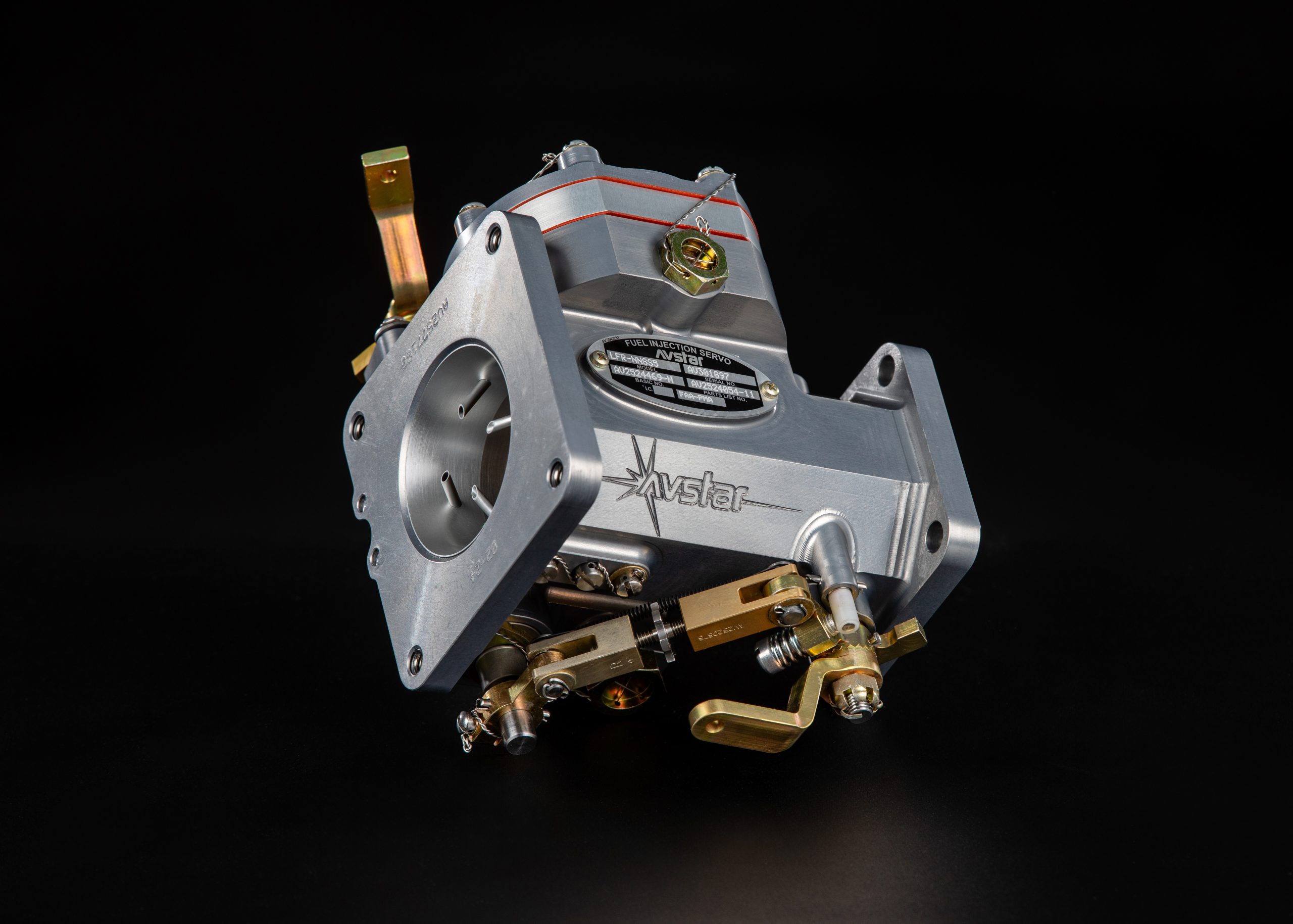
Aircraft Fuel Servos Explained: How They Work, Common Symptoms, and Maintenance Considerations
August 20th, 2026Posted by Cristhian Vera
In many continuous-flow fuel injection systems used on piston aircraft engines, the fuel servo serves as the central fuel-metering component, also referred to as a fuel injection servo, fuel control unit, or servo regulator. It works with the engine-driven fuel pump upstream and the flow divider and injector nozzles downstream to provide the fuel required by the engine across its operating range.
Because the fuel servo operates at a critical point in the metering system, contamination, corrosion, wear, improper adjustment, or deterioration of internal components can affect fuel-metering performance. However, symptoms such as rough operation, difficult starting, abnormal fuel-flow indications, or hesitation do not by themselves confirm that the fuel servo is the cause.
For A&P mechanics, aircraft owners, flight schools, fleet operators, and engine shops, understanding how the servo fits into the complete fuel injection system is an important first step in diagnosing these conditions correctly.
What Is an Aircraft Fuel Servo?
An aircraft fuel servo is an exacting, close-tolerance fuel-metering device used in continuous-flow fuel injection systems found on many general aviation piston engines.
In a typical installation, fuel from the aircraft fuel system is supplied to an engine-driven fuel pump. The pump provides fuel to the servo at the pressure and flow capability required by the system. The servo then meters fuel in relation to engine airflow and mixture-control input.
Metered fuel leaving the servo is routed to the flow divider, then through individual fuel lines to the injector nozzles located at the engine intake ports.
The fuel path can therefore be considered generally as:
Aircraft fuel supply → engine-driven fuel pump → fuel servo → flow divider → injector lines → injector nozzles
The fuel servo meters the fuel. It does not perform the same function as the engine-driven fuel pump, and it does not independently distribute fuel to each cylinder.
Exact system architecture varies by manufacturer, servo model, engine, and aircraft installation. The principles described in this article are intended to explain common operating concepts and should not be interpreted as a description of every fuel servo design.
Where the Fuel Servo Fits in a Continuous-Flow Fuel Injection System
Aircraft continuous-flow fuel injection differs substantially from automotive electronic fuel injection.
In a typical piston-aircraft continuous-flow system, fuel is not electronically pulsed into each cylinder according to individual injector timing. Instead, the fuel-metering system provides a continuous supply of metered fuel while the engine is operating, and downstream components distribute that fuel to the individual injector nozzles.
The fuel servo is one component within that larger system.
On the fuel side, the engine-driven fuel pump supplies fuel to the servo. The servo meters the fuel according to the design and calibration of the system. Metered fuel then travels to the flow divider and individual injector nozzles.
At the same time, induction air passes through the airflow portion of the servo. Changes in engine airflow create pressure relationships that the servo uses as part of the fuel-metering process.
This relationship between airflow and fuel metering allows the system to respond as engine operating conditions change.
How an Aircraft Fuel Servo Works
Although exact internal designs differ, many mechanically controlled aircraft fuel servos use airflow-related pressure differences and corresponding fuel-pressure forces to regulate fuel flow.
Sensing Engine Airflow
As induction air passes through the servo, the design of the airflow section creates pressure signals that change with engine airflow.
In many systems, these signals include differences between pressure measured in the incoming airflow and lower pressure created within the airflow passage. These pressure relationships act on flexible diaphragms or other regulating components within the servo.
As engine airflow changes, the pressure differential changes as well.
The fuel servo therefore does not simply determine fuel flow from throttle-lever position. Instead, throttle position affects how much air the engine can consume, and the resulting airflow conditions influence the metering system.
The exact airflow-sensing method varies by servo design.
Metering Fuel
Fuel-pressure forces act within the fuel-regulating portion of the servo and oppose or balance the forces created by the airflow-sensing section.
The regulator responds to those changing pressure relationships and controls the conditions across the fuel-metering section.
As engine airflow changes, the system adjusts fuel flow so that fuel delivery remains appropriately related to airflow within the calibrated operating range of the particular servo and engine application.
Exact arrangements of diaphragms, valves, jets, springs, passages, and regulating components vary by manufacturer and model.
The Role of the Throttle
The throttle controls airflow into the engine.
Opening the throttle allows greater airflow when engine speed, load, and operating conditions permit. That change in airflow changes the pressure relationships sensed by the servo, which in turn affects fuel metering.
This is an important distinction.
Advancing the throttle does not simply command a predetermined quantity of fuel. It changes the engine’s airflow capability, and the fuel-metering system responds to the resulting airflow conditions.
The Role of Mixture Control
The mixture control performs a different function from the throttle.
Depending on the servo design, the mixture control changes the fuel-metering relationship so the pilot can adjust the amount of fuel delivered relative to engine airflow.
At the full-rich position, the system provides the calibrated rich setting for the applicable installation. Moving the mixture control toward idle cutoff progressively reduces fuel flow according to the design of the unit.
Mixture control should not be confused with fuel distribution.
It changes the overall fuel-air relationship. The flow divider, injector lines, and injector nozzles perform the downstream fuel-distribution functions.
Components Commonly Found Within Aircraft Fuel Servos
Internal configurations vary significantly by manufacturer and model. The following components and functions are common to many mechanically controlled continuous-flow fuel-metering systems, but they should not be assumed to apply identically to every fuel servo.
Airflow Sensing Section
The airflow-sensing section develops pressure signals associated with the amount of induction air moving through the servo.
These signals are used by the regulating system to help establish the fuel flow required for the operating condition.
The exact method used to sense airflow depends on the servo design.
Fuel Metering Section
The fuel-metering section controls fuel flow through calibrated passages and pressure relationships within the servo.
Depending on the design, this section may incorporate metering jets, valves, mixture-control components, idle-metering components, and other calibrated passages.
Exact construction and calibration are model-specific.
Diaphragms and Regulating Components
Many mechanically controlled fuel servos use flexible diaphragms to translate air-pressure and fuel-pressure differences into mechanical movement within the regulating system.
Changes in diaphragm condition, leakage, stiffness, or physical damage can affect the pressure relationships required for proper metering.
Not all fuel servos use identical diaphragm arrangements, materials, or regulating systems.
Idle and Mixture Adjustments
Many servo installations incorporate model-specific provisions for idle speed and idle mixture adjustment, while the pilot-operated mixture control provides normal mixture control through the operating range and toward idle cutoff.
Adjustment procedures and specifications vary by servo and engine application and should be obtained from the applicable technical data.
Screens and Filtration Components
Some servo designs incorporate internal screens or strainers intended to help prevent contamination from reaching sensitive metering components.
Contamination that reaches calibrated passages or close-tolerance components can interfere with normal operation.
The location, design, inspection requirements, and servicing procedures for these components vary by model.
What Happens After Fuel Leaves the Servo?
Once fuel has been metered by the servo, it travels downstream to the flow divider.
The flow divider and injector nozzles perform functions separate from those of the servo.
The flow divider receives metered fuel and distributes it to individual injector lines. Those lines carry fuel to the injector nozzles located near the engine intake ports.
The injector nozzles then discharge fuel into the induction airflow serving the individual cylinders.
The general downstream path is:
Fuel servo → metered fuel → flow divider → injector lines → injector nozzles
A restriction, leak, contamination problem, or mechanical issue downstream of the servo can therefore affect engine operation even when the servo itself is functioning correctly.
This is one reason fuel-system troubleshooting should evaluate the entire system rather than automatically identifying the servo as the source of a symptom.
How Fuel-Servo Operation Changes With Engine Conditions
The fuel servo operates over a wide range of airflow and fuel-flow conditions.
Starting
During engine start, correct fuel delivery depends on the complete installation, including fuel supply, fuel pressure, mixture position, starting procedure, and other system characteristics.
A difficult hot or cold start can involve fuel metering, but it should not automatically be diagnosed as a servo problem.
Idle
At idle, airflow through the servo is relatively low.
Fuel servos incorporate design features and model-specific adjustments intended to provide the required fuel characteristics under low-airflow conditions.
Correct throttle and mixture rigging, idle speed, idle mixture, fuel pressure, induction-system condition, injector condition, and ignition performance can all influence idle quality.
Takeoff and Climb
At higher power settings, increased engine airflow produces corresponding changes in the airflow signals used by the metering system.
The servo responds by providing fuel according to its calibration and the requirements of the particular engine application.
Cruise and Leaning
During cruise, throttle position establishes the desired power setting while the mixture control allows the pilot to adjust the fuel-air mixture in accordance with the aircraft and engine operating instructions.
The servo continues responding to airflow while mixture-control input changes the fuel-metering relationship.
Rapid Throttle Movement
Rapid throttle movement changes airflow conditions quickly.
The fuel-metering system must respond to those changes while maintaining appropriate fuel delivery through the transition.
Hesitation or stumbling during throttle advancement can involve the servo, but it can also result from idle-mixture settings, fuel pressure, injector restrictions, control rigging, induction problems, ignition issues, or other engine conditions.
Idle Cutoff
Moving the mixture control to idle cutoff reduces fuel flow according to the design of the servo.
Difficulty obtaining the expected shutdown characteristics may warrant investigation, but the servo is not the only possible cause.
Control rigging, adjustment, fuel pressure, installation condition, and other factors should also be evaluated as applicable.
Conditions That Can Affect Fuel Servo Operation
Fuel servos are closely calibrated components. Several conditions can interfere with their operation.
Contamination
Small particles or other contaminants can interfere with calibrated fuel passages, valves, screens, or other close-tolerance components.
Potential sources may include:
- Fuel-system debris
- Corrosion products
- Deteriorated hose material
- Seal material
- Contamination introduced during maintenance
- Debris originating elsewhere in the aircraft fuel system
Depending on where the contamination is located, the result may include incorrect metering, unstable operation, difficulty obtaining proper adjustment, or inconsistent engine response.
Internal Corrosion
Aircraft and fuel-system components exposed to moisture, extended inactivity, or unfavorable environmental conditions can develop corrosion.
Corrosion affecting calibrated passages, sealing surfaces, valves, springs, or other close-tolerance components can interfere with proper operation.
Serviceability should be determined using the inspection criteria applicable to the specific unit rather than visual appearance alone.
Diaphragm Deterioration
Many mechanically controlled fuel servos use diaphragms within their regulating systems.
Over time, diaphragm condition can be affected by age, operating environment, material condition, and service history.
Possible concerns may include:
- Reduced flexibility
- Cracking
- Leakage
- Physical deterioration
- Changes that affect regulator response
Because designs and materials vary, diaphragm condition and serviceability should be evaluated using the applicable overhaul or maintenance criteria.
Wear of Internal Metering Components
Internal components can experience wear as a result of operating history, contamination, environmental exposure, and other service factors.
Depending on the design, wear may affect:
- Metering components
- Shafts
- Bearings or bushings
- Valves
- Sealing surfaces
- Calibrated passages
Whether that wear is acceptable depends on the specific component and the applicable inspection criteria or service limits.
Improper Maintenance, Adjustment, or Rigging
Fuel servos are calibrated systems.
Incorrect throttle or mixture rigging, improper idle adjustment, previous maintenance, or internal adjustments performed without following applicable technical instructions can produce symptoms that resemble an internal servo problem.
For that reason, troubleshooting should include installation and control-system condition before assuming that the servo itself requires removal.
Common Symptoms That May Involve a Fuel Servo
Certain symptoms may justify including the fuel servo in the diagnostic process.
None of these symptoms independently confirms a servo fault.
Rough or Unstable Idle
Incorrect fuel metering can contribute to rough or unstable idle.
Other possible causes include:
- Idle-mixture adjustment
- Throttle or mixture rigging
- Induction leaks
- Fuel pressure
- Flow-divider operation
- Injector nozzles
- Ignition components
- Spark plugs
- Engine mechanical condition
The servo should therefore be evaluated as one part of the complete system.
Difficult Starting
Incorrect fuel metering can contribute to difficult hot or cold starting if the mixture delivered during the start is excessively rich or lean.
Starting difficulty can also involve:
- Fuel pressure
- Boost-pump operation
- Vapor in the fuel system
- Mixture position
- Injector condition
- Ignition condition
- Starting technique
- Engine mechanical condition
A hard-starting engine does not by itself establish that the fuel servo requires overhaul or replacement.
Abnormal Fuel-Flow Indications
An unexpected fuel-flow indication warrants investigation, but the indication should not automatically be treated as evidence of incorrect servo output.
Possible causes can include:
- Fuel-metering problems
- Restricted injector nozzles
- Fuel-line restrictions
- Flow-divider issues
- Fuel-pressure problems
- Fuel leakage
- Fuel-flow indicating equipment
Both the actual fuel system and the indicating system should be evaluated before the servo is identified as the cause.
Hesitation During Throttle Advancement
Hesitation or stumbling during acceleration may be associated with a fuel-metering problem.
It can also result from:
- Incorrect idle mixture
- Fuel pressure
- Injector restrictions
- Flow-divider condition
- Control rigging
- Induction leaks
- Ignition problems
- Other engine conditions
The symptom should be diagnosed before the servo is identified as the source.
Rich or Lean Operation
An unexplained rich or lean condition may justify evaluation of fuel-servo performance, but the condition remains a system-level symptom.
Potential causes can include:
- Fuel pressure
- Control rigging
- Induction leakage
- Injector nozzles
- Flow-divider operation
- Contamination
- Installation issues
- Engine mechanical condition
A rich or lean indication should not automatically be interpreted as an internal servo failure.
Difficulty Obtaining Proper Mixture or Idle Adjustment
If applicable fuel-metering or idle-mixture settings cannot be brought within specification, the servo may require further evaluation.
Before reaching that conclusion, technicians should verify related:
- Installation condition
- Control rigging
- Fuel supply
- Fuel pressure
- Induction-system condition
- Injector nozzles
- Flow-divider condition
- Applicable adjustment procedures
Why Symptoms Do Not Automatically Mean the Servo Is the Problem
Aircraft fuel-system troubleshooting should be systematic.
A fuel servo operates as one component within a larger engine and aircraft system.
Fuel supply, pumps, filters, control rigging, the induction system, flow divider, injector lines, injector nozzles, ignition components, engine condition, and cockpit indications can all influence symptoms that initially appear to involve fuel metering.
A symptom may indicate a fuel-metering issue, but the servo should not be identified as the cause until the complete fuel, induction, ignition, indicating, and relevant engine systems have been evaluated as appropriate for the installation.
Replacing or overhauling a servo without confirming the source of the problem can leave the original condition unresolved.
Aircraft Fuel Servo Inspection and Maintenance Considerations
Initial evaluation of a suspected fuel-metering problem commonly begins with the installed system.
Depending on the aircraft, engine, servo model, and applicable technical data, areas of evaluation may include:
- Fuel supply
- Fuel pressure and flow
- Fuel filters or strainers
- Fuel-pump operation
- Throttle and mixture rigging
- Induction-system leakage or damage
- Servo mounting and security
- Fuel fittings
- External fuel leakage
- Flow-divider condition
- Injector lines
- Injector nozzles
- Fuel-flow indicating equipment
- Ignition-system condition
- Relevant engine mechanical condition
The appropriate tests, limits, adjustments, and inspection procedures vary by application.
Inspection, adjustment, installation, repair, overhaul, calibration, and return-to-service activities should be performed by appropriately qualified personnel using the manufacturer’s applicable instructions and the approved or acceptable technical data required for the specific task.
Fuel Servo Bench Testing, Overhaul, and Calibration
Some fuel-servo conditions cannot be reliably evaluated through external inspection or aircraft operation alone.
When system-level troubleshooting indicates that further servo evaluation is necessary, controlled bench testing can be used to compare the unit’s performance with the specifications applicable to that particular model and application.
Depending on the unit and test requirements, bench testing may evaluate:
- Fuel-flow characteristics
- Pressure response
- Internal or external leakage
- Mixture characteristics
- Idle characteristics
- Calibration at specified operating conditions
Proper calibration involves more than obtaining a single fuel-flow value.
Depending on the servo, calibration may require:
- Controlled test equipment
- Correct fixtures and adapters
- Calibrated instrumentation
- Specified inlet conditions
- Defined test points
- Model-specific calibration limits
- Controlled adjustment procedures
- Inspection criteria
- Proper documentation
Bench performance testing and physical inspection are also different processes.
A servo can be tested for operating performance on controlled equipment, while determining the physical condition and serviceability of internal components may require disassembly and inspection appropriate to the scope of maintenance or overhaul being performed.
When Should a Fuel Servo Be Overhauled or Replaced?
There is no universal answer that applies to every fuel servo.
The appropriate action depends on:
- Servo model
- Engine and aircraft application
- Applicable maintenance requirements
- Operating and maintenance history
- Inspection findings
- Component condition
- Parts availability
- Serviceability
- Calibration results
Overhaul may be appropriate when the unit remains eligible for overhaul and its components can be restored to a serviceable condition in accordance with the applicable requirements.
Replacement may be appropriate when:
- Damage exceeds allowable limits
- Corrosion exceeds applicable limits
- Required components are not serviceable
- Required parts are unavailable
- Calibration cannot be restored
- Replacement is otherwise required by the applicable maintenance information
Overhaul or replacement should not be used as a substitute for diagnosing an unrelated engine or aircraft-system problem.
Application and Eligibility Considerations
Aircraft fuel servos are not automatically interchangeable between engines or aircraft.
Before installing a replacement unit, the mechanic should establish the correct:
- Part number
- Engine eligibility
- Aircraft eligibility, where applicable
- Configuration
- Calibration
- Control arrangement
- Installation requirements
- Applicable technical documentation
A servo that appears physically similar to another unit may have different calibration or application requirements.
The applicable eligibility and installation information should therefore be verified before installation and return to service.
FAQs About Aircraft Fuel Servos
What does an aircraft fuel servo do?
In a continuous-flow fuel injection system, the fuel servo meters fuel in relation to engine airflow and mixture-control input according to the design and calibration of the system.
Metered fuel then travels to downstream components such as the flow divider, injector lines, and injector nozzles.
What are the symptoms of a failing aircraft fuel servo?
There is no single symptom that confirms a failing fuel servo.
Rough idle, difficult starting, abnormal fuel-flow indications, rich or lean operation, hesitation, or difficulty obtaining proper adjustment may justify evaluating the servo, but the same symptoms can originate elsewhere in the fuel, induction, ignition, indicating, or engine systems.
Proper troubleshooting is necessary before identifying the servo as the cause.
Can contamination affect an aircraft fuel servo?
Yes.
Contamination can restrict calibrated passages or interfere with close-tolerance metering components. The effect depends on the type, quantity, and location of the contamination.
How is an aircraft fuel servo tested?
Fuel servos can be evaluated using controlled test equipment and procedures applicable to the particular model.
Testing may include fuel-flow, pressure-response, leakage, mixture, idle, and calibration checks at specified operating conditions.
Should a fuel servo be overhauled or replaced?
The decision depends on the condition of the unit, applicable maintenance information, serviceability of internal components, parts availability, calibration results, eligibility, and other operational considerations.
Neither overhaul nor replacement should be assumed necessary solely because an engine exhibits a symptom associated with fuel metering.
Does an aircraft fuel servo have a fixed service life?
Service and overhaul requirements vary by servo, engine, and application.
Applicable manufacturer instructions, service information, operating history, and maintenance requirements should be reviewed when determining continued service or overhaul requirements.
A universal calendar or operating-hour limit should not be assumed unless applicable technical information establishes one for the specific unit.
Are aircraft fuel servos interchangeable?
Not automatically.
Part number, application eligibility, configuration, calibration, control arrangement, and installation requirements must be verified for the specific engine and aircraft application.
The Importance of System-Level Troubleshooting
The fuel servo performs a central metering function in many continuous-flow aircraft fuel injection systems.
Correct operation depends not only on the servo itself, but also on:
- Fuel supply
- Fuel pressure
- Engine airflow
- Control rigging
- Induction-system condition
- Downstream fuel-distribution components
- Calibration
- Ignition condition
- Overall engine and aircraft installation
For that reason, effective troubleshooting starts with understanding the complete system rather than replacing components based solely on symptoms.
A disciplined diagnostic process helps distinguish an actual fuel-servo problem from conditions originating elsewhere in the aircraft or engine.
Fuel Servo Resources from AVStar
AVStar designs, manufactures, and overhauls fuel-system components for general aviation applications.
AVStar manufactures fuel servo regulators under FAA Parts Manufacturer Approval (PMA) for eligible applications.
For current model eligibility, installation information, product availability, and applicable technical resources, consult AVStar’s fuel-servo product and service information.